
Owner guides — / 04
A repair you leave long enough becomes a deduction from your rent
Bahraini law gives a tenant four separate remedies when a repair is ignored, and one of them lets them spend your money without asking. Most owners have never read the clause.
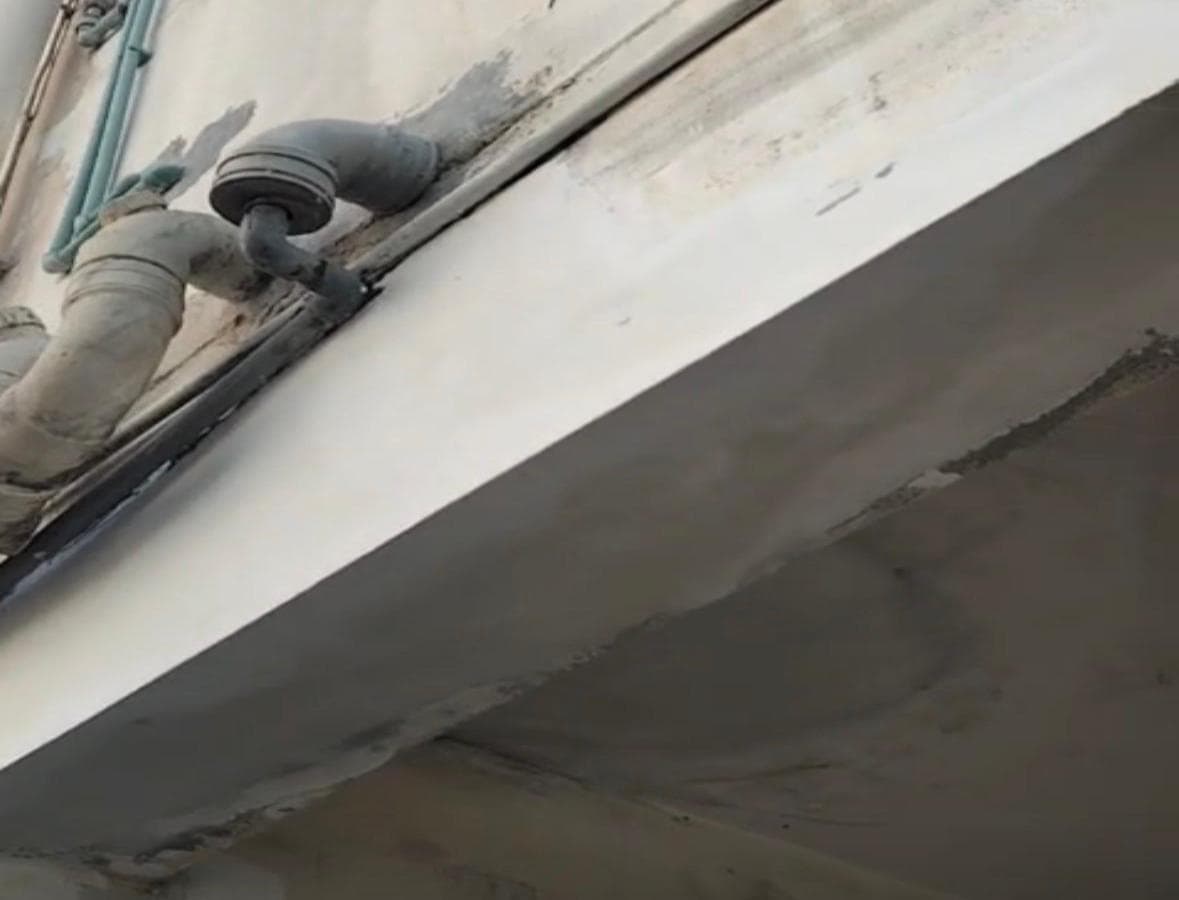
A tenant reports a leak. Nothing happens for a few weeks — the owner is abroad, the message sits in a WhatsApp thread, it is not an emergency. Then an invoice arrives that nobody agreed to, from a contractor nobody chose, and the next rent payment is short by exactly that amount.
That is not a tenant behaving badly. Under the right conditions it is a tenant exercising a right the law gives them, and the owner has very little to say about it after the fact.
What the law puts on you
Residential and commercial leases in Bahrain are governed by the Property Rent Law, Law No. 27 of 2014. Its structure assumes the landlord maintains the property. The tenant's obligation is the rent; keeping the premises fit for what they were let for sits on the other side of the agreement.
A lease can move some of that around, and many do — a tenant taking on consumables, filter changes or minor items is ordinary and enforceable. What a lease cannot do is remove the statutory remedies underneath. Those exist regardless of what the contract says, which is why an owner who has never read them can be surprised by one.
The four things a tenant can do instead
Article 10 gives the tenant an escalating set of options where the landlord fails to carry out required maintenance. They are not alternatives the landlord gets to choose between.
Do the work and deduct it
The tenant carries out the required maintenance themselves and recovers what they paid by taking it out of the rent. They select the contractor and they agree the price — you are not consulted on either, because by this point the law no longer assumes you will act.
Pay less rent
Where the defect reduces what the tenant is actually getting from the property, the rent can be reduced to match. A flat with one of two bathrooms out of use is not delivering what was let.
Extend the lease
The lease can be extended by the period during which the benefit was lost. Time the tenant could not properly use the property is added back at the end, at the same rent.
End the lease, with compensation
Where the premises stop being fit for the purpose they were let for and are not restored within a reasonable time, the tenant can terminate and seek compensation. Bahrain's Civil Code carries a parallel provision to the same effect.
The first remedy is the one that surprises people. It converts a repair you postponed into a price somebody else agreed on your behalf.
The letter that starts the clock
The deduction right is not automatic and it is not triggered by a text message. Article 10 turns on the landlord having been informed by way of a registered letter to carry out the maintenance. That is the mechanism, and it cuts both ways.
For an owner it means two practical things. A WhatsApp message about a leak, however clear, is not the thing that starts the clock — so not every complaint is a countdown. But once a registered letter has been served, the position changes completely, and continuing to do nothing is a decision with a defined consequence rather than a delay.
It also means the registered letter is the single most important piece of paper in the relationship, and it is the one most likely to arrive at an address the owner no longer uses, or to sit unopened while they are out of the country. An absentee owner without someone opening post in Bahrain can pass through the entire notice period without ever knowing it started.
The trap that removes your forum
Article 3 requires lease agreements to be put in writing and registered within one month of being concluded. Legal commentary in Bahrain treats registration and its fee as the landlord's responsibility rather than the tenant's — and the fee itself is a matter of a few dinars.
Article 8 is the reason it matters. It states plainly that the Rent Disputes Committee shall not accept cases or disputes resulting from unregistered lease agreements.
An unregistered lease does not weaken your position in a dispute. It removes the place where the dispute would be heard.
The owner most exposed to this is the one who least expects to be: the one whose tenants have never caused trouble, whose leases were agreed informally between people who trusted each other, and who therefore has never needed the Committee. The registration was skipped precisely because nothing ever went wrong, and it is only discovered to be missing at the moment something does.
Do this first
Three questions about your own building
None of these need a lawyer, and between them they tell you whether you are exposed. Most owners cannot answer the first one.
- 01How many of your leases are registered? Not how many are signed — registered. If the answer is a guess, that is the finding, and it is fixable for a few dinars per lease.
- 02Has any tenant ever sent you a registered letter about a repair? Check who receives post at the address on your leases, and whether anyone has opened it recently.
- 03When did each lease last have a rent increase? You need the date, not the year — the two-year clock and the notice period both run from it.
- 04Anything you cannot answer within a minute is worth an afternoon now rather than a dispute later.
The clock you are probably not tracking
Article 27 controls rent increases, and it is more restrictive than most owners assume. An increase is permitted only after two years have passed from the lease commencement date or from the date of the last increase. The ceiling is 5% for residential property and 7% for commercial, industrial, professional and other purposes. Across the whole life of the lease there is a maximum of five increases.
There is also a notice requirement that is easy to miss: the tenant must be notified at least three months before the second year expires. Miss the notice and the increase does not simply happen late — the window it belonged to has passed.
Across a handful of units this is a diary problem. Across thirty it is not something a spreadsheet reliably survives, because every lease has its own clock running from its own date, and the cost of missing one is invisible — it never appears as a loss, only as an increase that never happened.
Where the line is
This is a description of how the law is structured, not legal advice, and it is deliberately general. Whether a particular deduction was lawful, whether a specific defect amounts to loss of benefit, and what counts as a reasonable time in a given case are all questions with facts attached — and anyone who answers them from a summary of your lease is guessing. For a live dispute, take it to counsel.
What is not ambiguous is the shape of it. Maintenance you defer does not stay deferred at your discretion. After a registered letter it becomes a decision someone else is entitled to make for you, at a price you did not agree — and if the lease was never registered, without a forum to argue about it in.
Count how many of your leases are registered.
If you cannot answer that in under a minute, that is worth knowing on a quiet afternoon rather than during a dispute. Al Wajaha Projects has managed and maintained buildings in Bahrain since 1987 — tell us what you own and we will tell you what is missing.